From Toilets to Sewers
Wednesday, 22 April 2026
- Time
- 18:00 - 21:00
- Venue
- Arena Theatre, Wolverhampton, WV1 1SE
Talk by Fran Pheasant-Kelly
More Information (WCR FM is not responsible for external websites)
There is a particularly mundane domestic space that is always highly significant in film, the toilet. This space does not appear without good narrative reason.
Invariably, cinematic toilets are troublesome spaces, particularly for men, and as places associated with ‘letting go’, they are always liable to loss of control, and therefore to a compromising of masculinity. Consequently, while usually pivotal to the plot, such scenes tend to be sites of horror, disgust and death, and as Ruth Barcan (2005: 8) suggests, are ‘dirty spaces’.
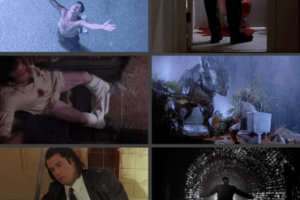
Here, I argue that the cinematic bathroom is a site of abjection. In fact, mainstream American films inevitably feature bathrooms and toilets as sites of extreme violence and bloody death as evidenced, for example, in films as diverse as The Conversation (Coppola, 1974), Crimson Peak (del Toro, 2015), Pulp Fiction (Tarantino, 1994) and Casino Royale (Campbell, 2006). Alternatively, they are spaces of crude comedic rupture as in There’s Something About Mary (Farrelly Brothers, 1998).
While the on-screen toilet might be an appropriate location for secret or illicit acts to occur, its appearance has a sordid realism that depletes Hollywood of its glamour. At the same time, spaces associated with the toilet, such as the bath, shower or sewer, may have alternate, if related implications. For instance, in The Shawshank Redemption, the sewer provides a means of escape and enables a reclaiming of identity.
Regardless, the space of the cinematic bathroom has abject implications, both in the primary associations with bodily disgust, as in Saltburn (Fennell, 2023) but also in the distinctive narrative events that unfold therein. Engaging with Julia Kristeva’s (1982) theory of the abject, this talk textually analyses key scenes from relevant films to discuss some of those implications.
Fran Pheasant-Kelly is a Reader in Film and Screen and Head of Doctoral Studies at Wolverhampton University, UK. She is also a Leverhulme Fellow, currently tracing the life and works of James Whale. Her research centres on early cinema, abject spaces, fantasy, and the medical humanities.
She has around ninety-five publications, including two monographs, Abject Spaces in American Cinema (2013) and Fantasy Film Post 9/11 (2013) and is the co-editor of Spaces of the Cinematic Home (2015), Tim Burton’s Bodies (2021) and Action Heroines in the Twenty-First Century: Sisters in Arms (2025). She is presently working on several monographs including A History of HIV/AIDS in Film, Television and the Media (2026), The Revenant: Towards a Sensory Cinema (2026) and Critical Perspectives on Kathryn Bigelow (2027)
Venue
Arena Theatre
Wulfruna Street
Wolverhampton
WV1 1SE
Dates
The event runs from 18:00 to 21:00 on the following dates.
Select a date to add this event to your calendar app.